1 9 7 6 — 1 9 7 7
Exclusion
Antarctica
Dr. Donna Oliver
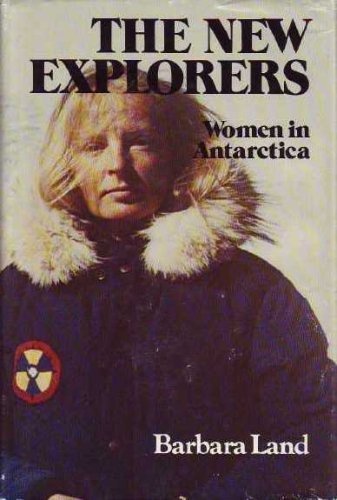
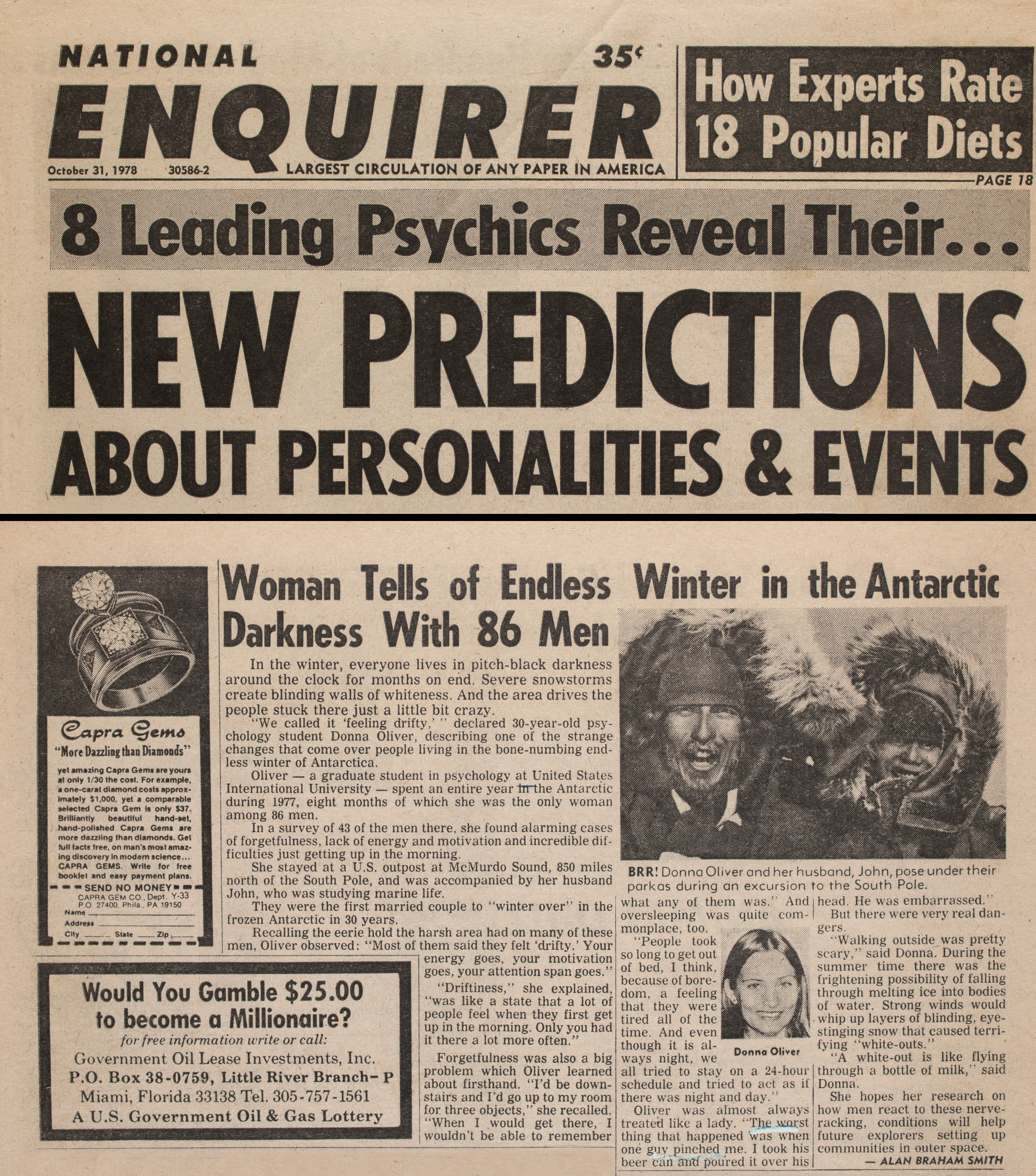
“Woman tells of endless winter in the Antarctic darkness with 86 men.”
—National Enquirer, October 31, 1978
1 9 7 6 — 1 9 7 7
Dr. Donna Oliver
“Woman tells of endless winter in the Antarctic darkness with 86 men.”
—National Enquirer, October 31, 1978
The Expedition
When the last plane departed on February 20, 1977, Dr. Donna Oliver was alone on the continent—the fifth woman to winter below the Antarctic Circle, and the first to face an Antarctic winter without another woman present.
During the 1976–77 seasons, Dr. Oliver lived at McMurdo Station, Antarctica, for a full year, spanning two summers and one winter of research. Even before the plane skidded to a stop on the skiway, she was forced to contend with a bureaucracy and institutional culture that believed women did not belong on the ice—that their presence violated the natural order of things.
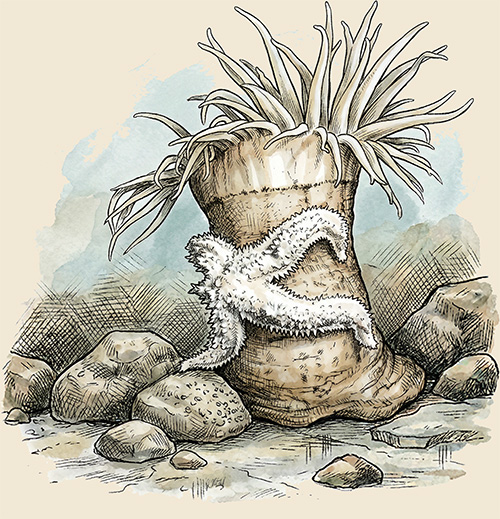
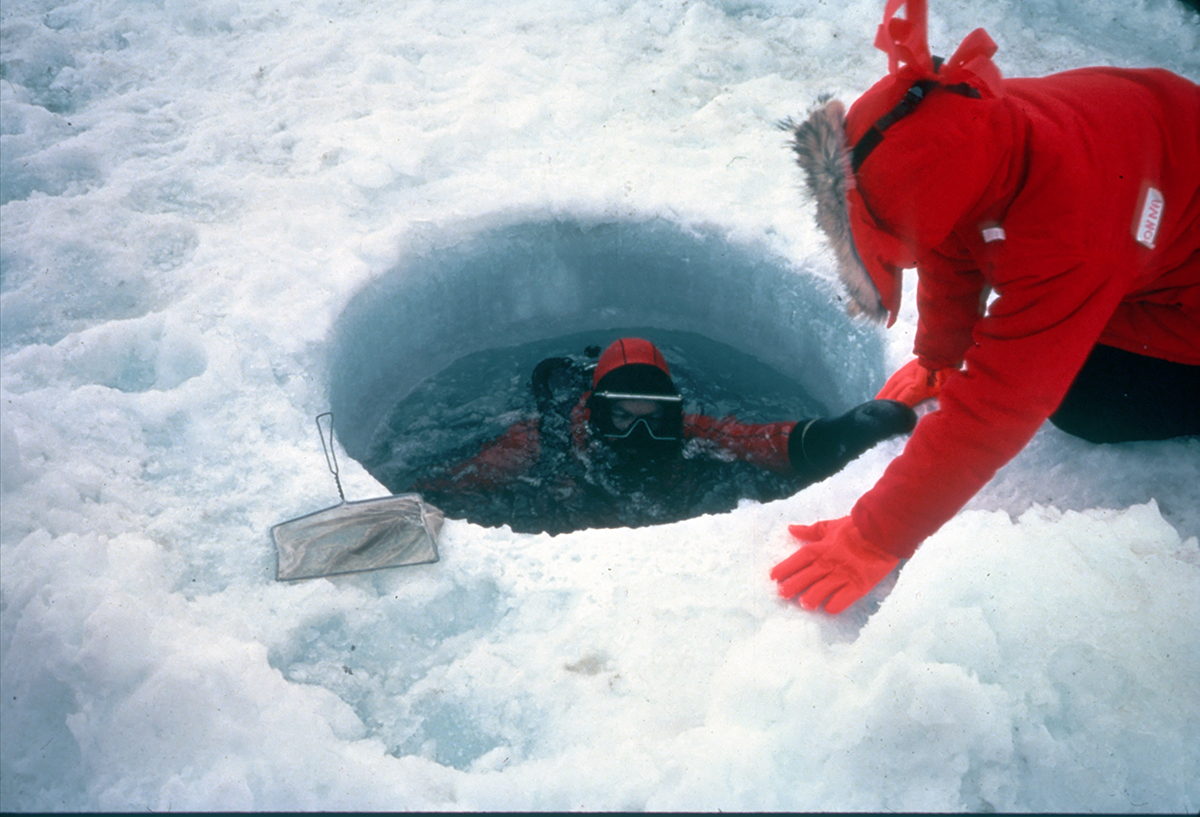
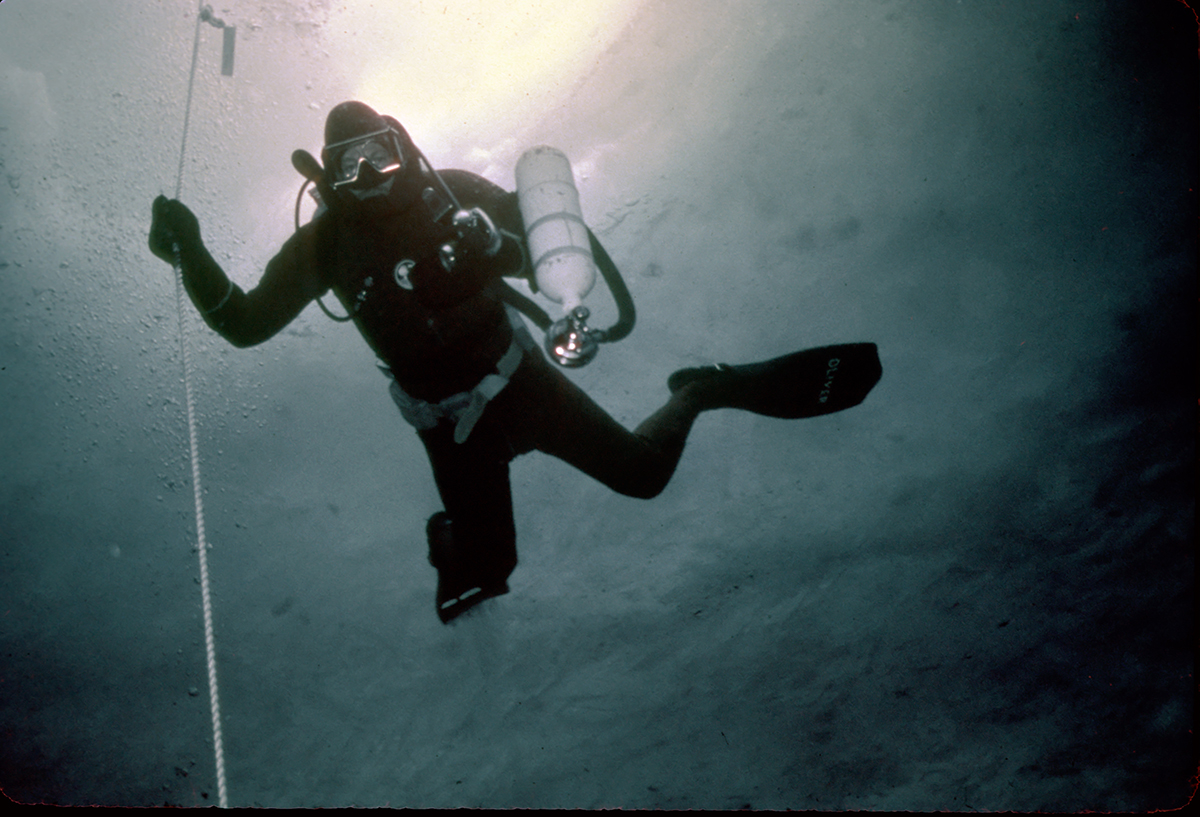
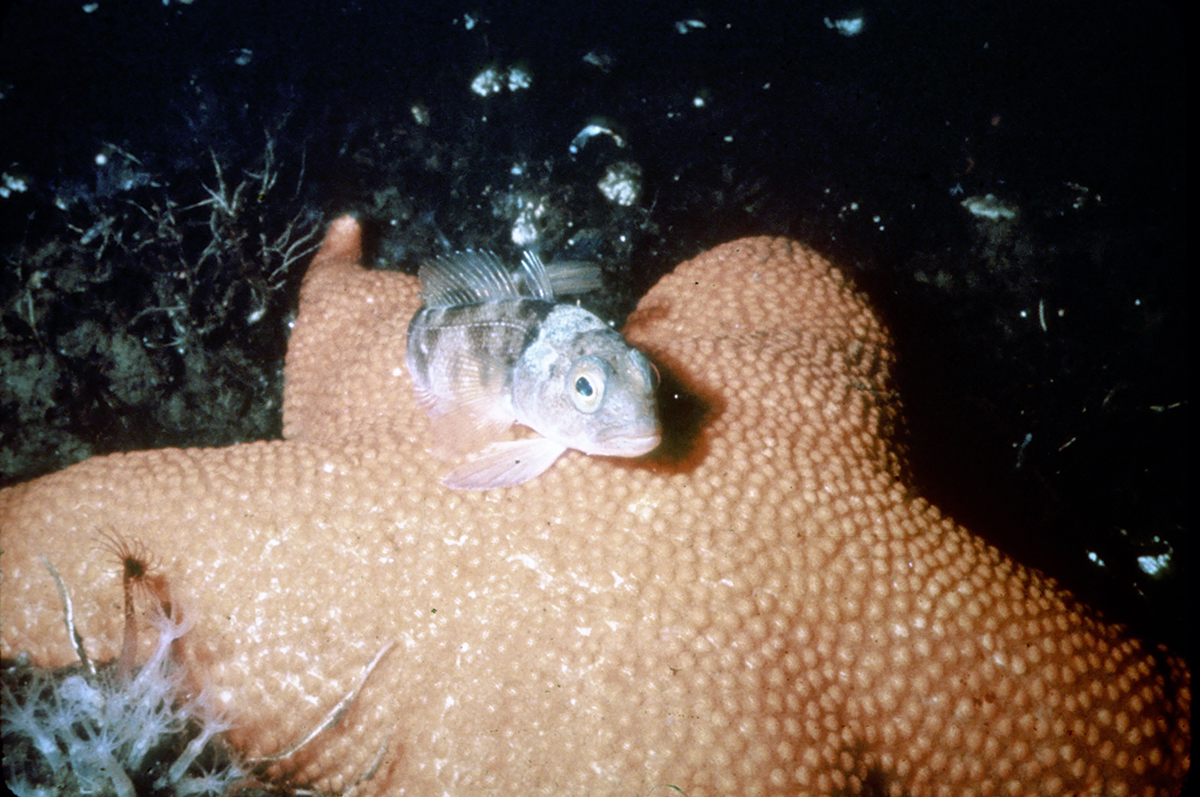
Officially, she was stationed as a research assistant on a benthic ecology study of the muddy bottom beneath the frozen Ross Sea. Unofficially — because the National Science Foundation refused to fund “soft science” in Antarctica — she conducted pioneering psychological research on isolation, stress, and resilience as her winter “hobby.”
Her presence was not welcomed by all. The institutional resistance she faced — and the personal cost of breaking that barrier — remained largely untold for nearly fifty years.
Until now.

Timeline
1969
Geochemist Lois Jones won the right to collect her own data in the Dry Valleys — on the condition that she lead an all–female team. Jones, geologist Eileen McSaveney, entomologist Kay Lindsay, and student Terry Lee Tickhill completed a four–month field study.
November 12, 1969
Louis Jones and her team, along with New Zealand biologist Pamela Young and Detroit Free Press reporter Jean Pearson, became the first women to visit the South Pole.
1974
1974 After fifteen years of proposals, biologist and world authority on krill Mary Alice McWhinnie was given permission to winter at McMurdo as Chief Scientist, with her research assistant Sister Mary Odile Cahoon. They were the third and fourth women ever to winter on the continent — the first since the U.S. government took over administration of McMurdo.
June 1976
Principal Investigator Paul Dayton filled out the applications for his dive team, listing Donna as “D. Oliver” and omitting her gender. She was accepted.
Winter 1976
With no NSF funding for psychological research — dismissed as “soft science” — Donna conducts her groundbreaking study as a “hobby,” interviewing winterers through months of darkness.
July 1976
The National Science Foundation learned she was a woman and moved to revoke her application. They relented only after being reminded of Title IX.
December 8, 1976
Donna boarded a Hercules ski–plane in Christchurch, New Zealand, and landed eight hours later at McMurdo Station.
February 20, 1977
The last summer personnel departed for the season. Donna became the only woman on the continent.
1979
Dr. Donna Oliver's dissertation Some Psychological Effects of Isolation and Confinement in an Antarctic Winter-Over Group becomes a singular study of isolation psychology, still cited nearly five decades later.
2025
Nearly fifty years later, Dr. Oliver and her daughter, CS Mitchell, write the story of Donna's year at the bottom of the world. No Woman’s Land by Dr. Donna Oliver and CS Mitchell. Forthcoming.
Photographs
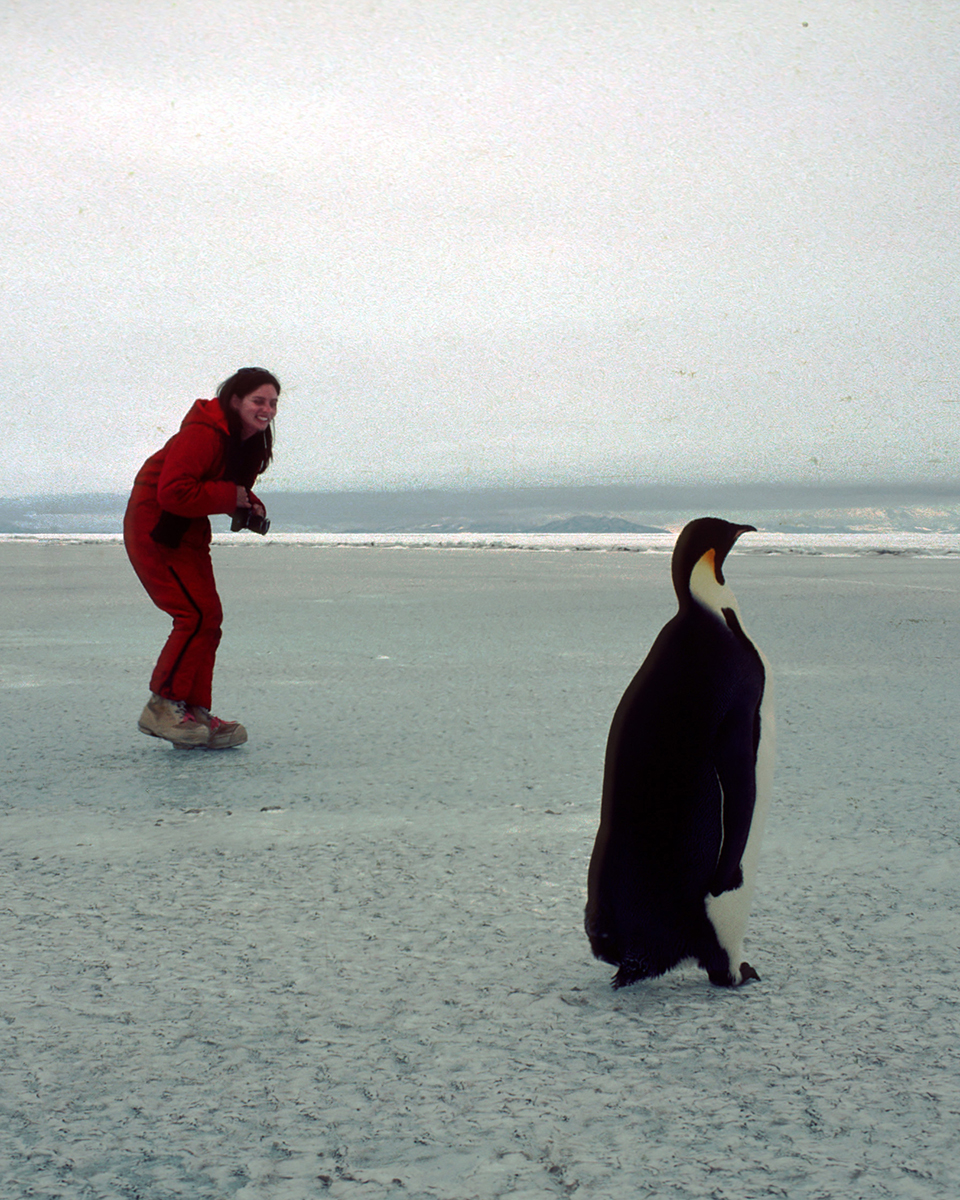
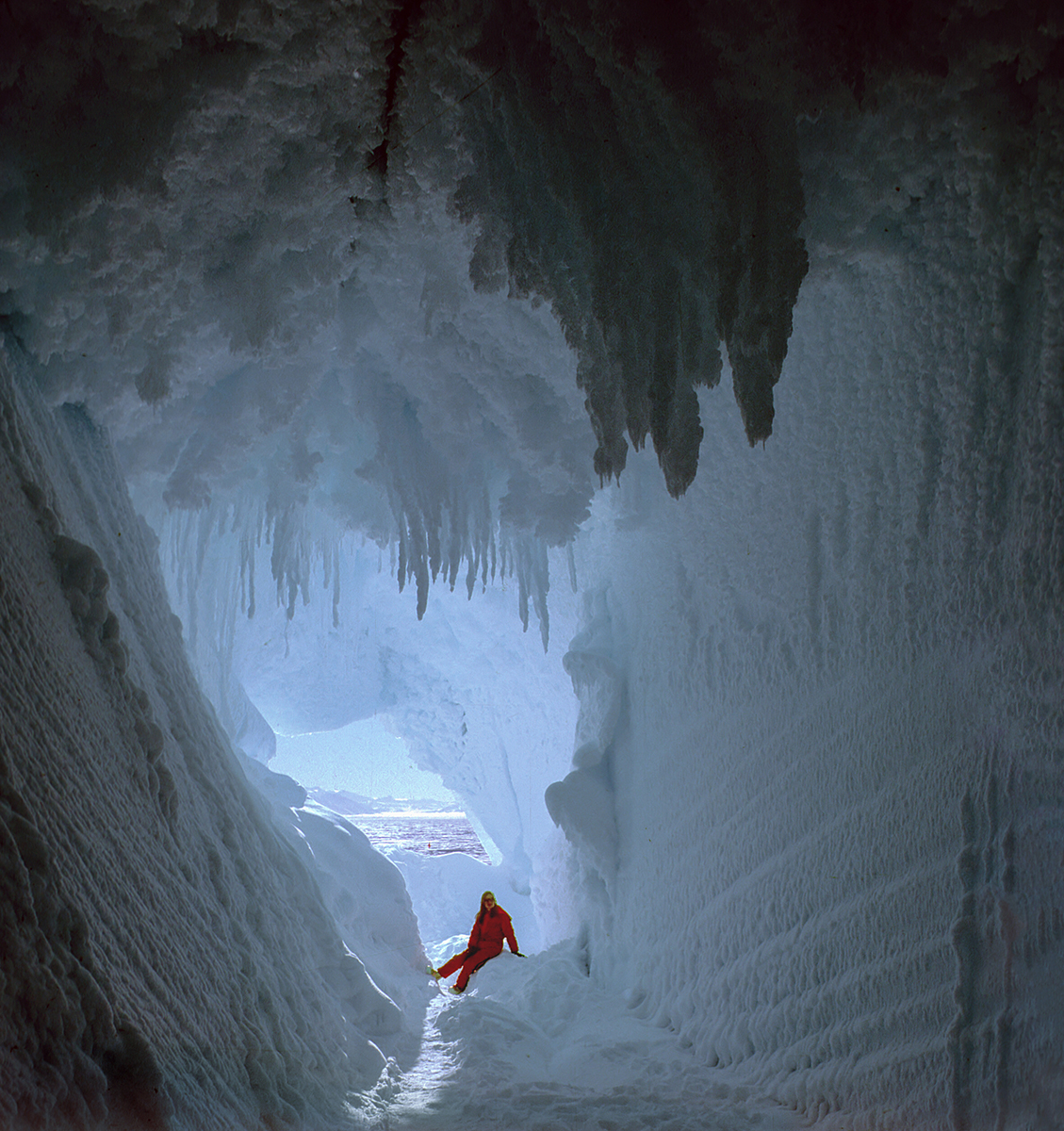
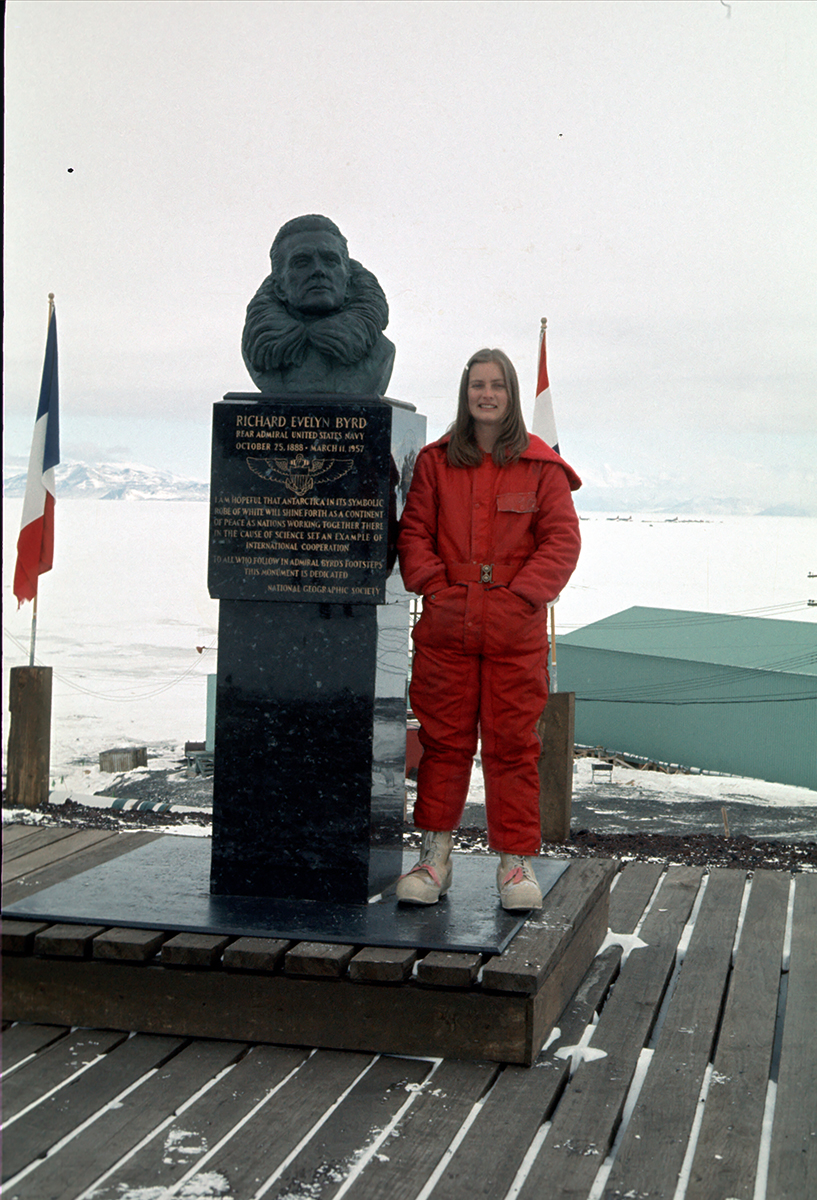
Photographs from the personal archive of Dr. Donna Oliver, 1976–1977.

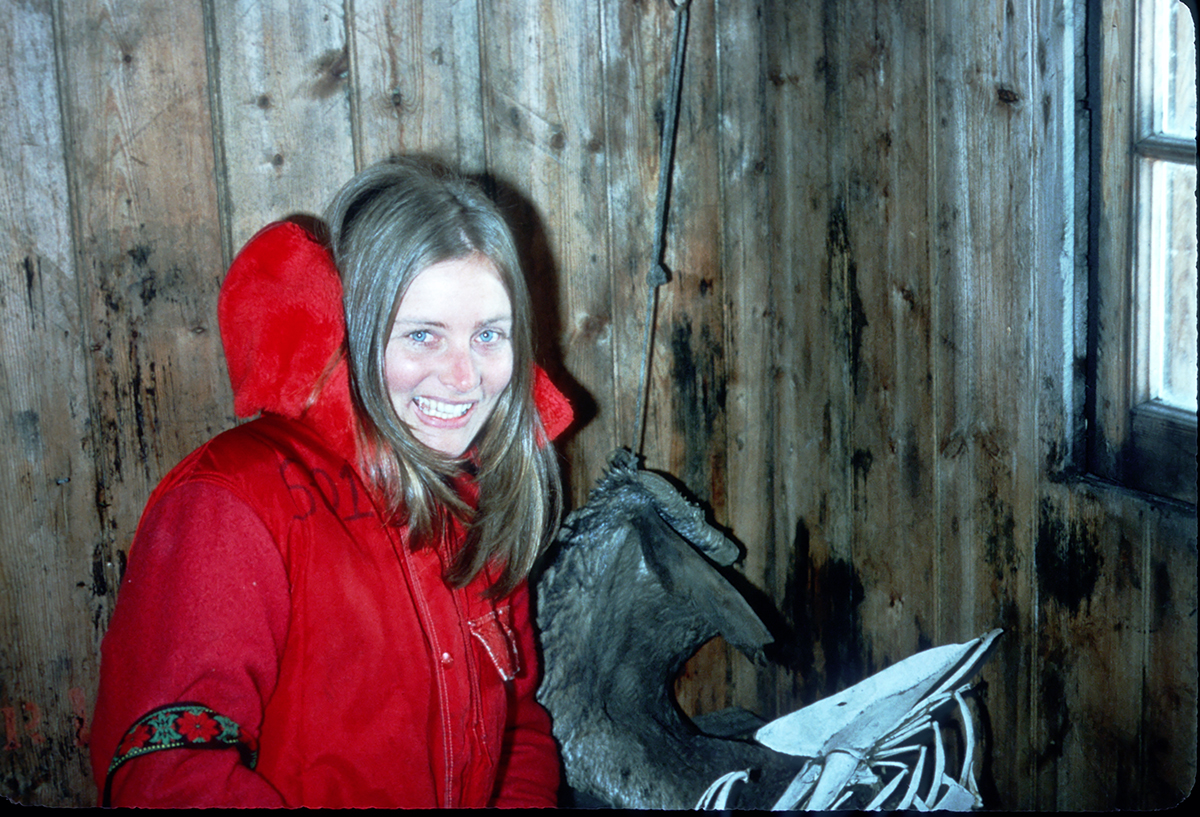
Donna in Discovery Hut
Summer 1977



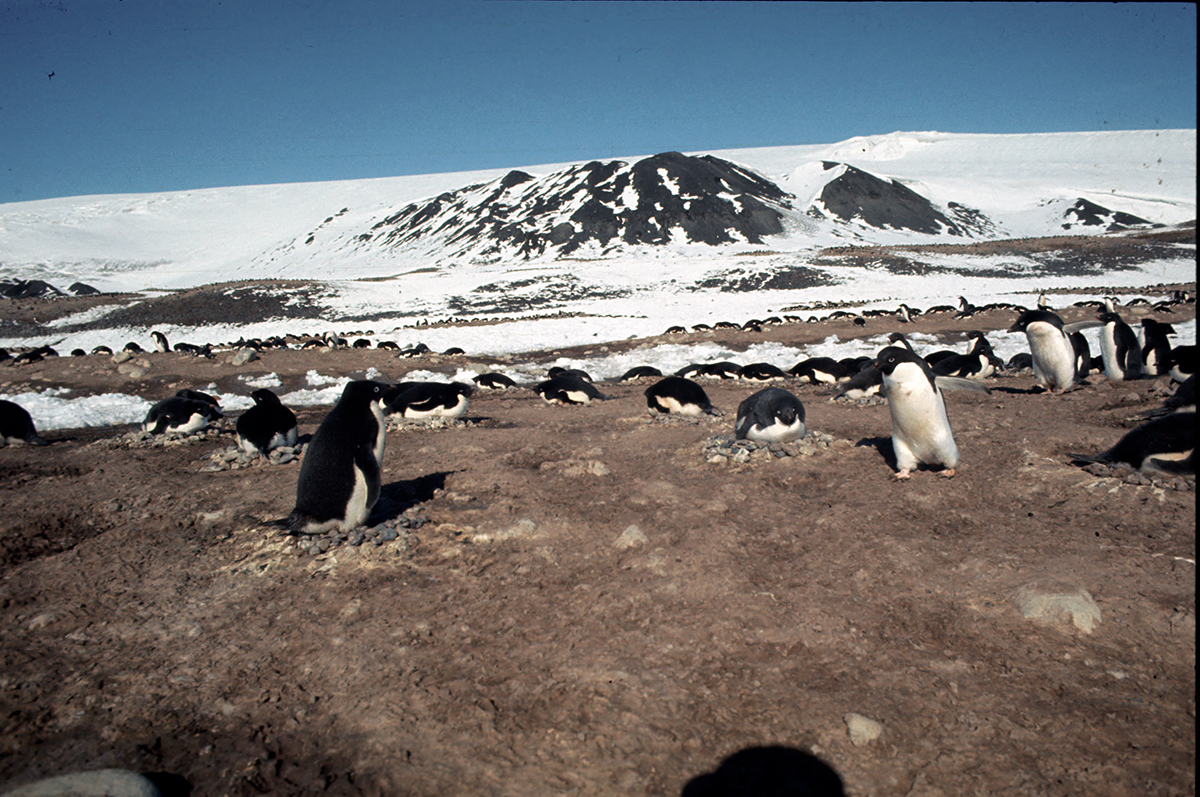
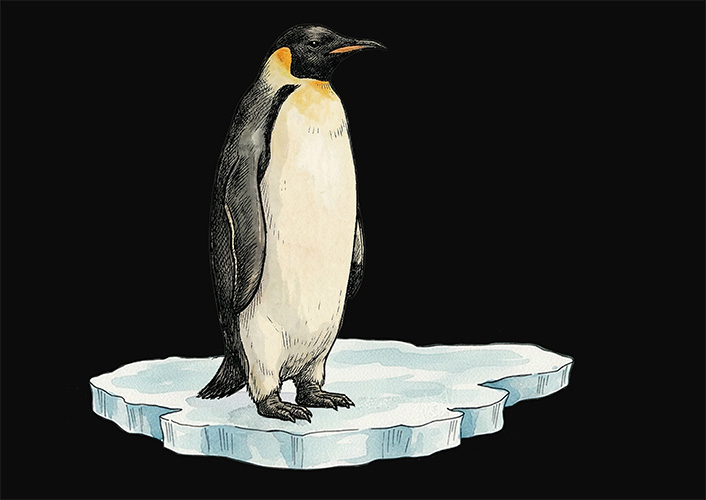
Adélie at Cape Royds
Summer 1976
About
Scientist. Psychologist. Antarctic pioneer. The woman who proved that the ice doesn’t break you–it reveals you.
In 1976, Donna Oliver was finishing her doctorate in psychology when she was offered a winter position at McMurdo Station, Antarctica. She accepted without hesitation. The work combined her love of biological research with a singular opportunity: Antarctica is the closest earthly analogue to the isolation of space, and her childhood — spent playing among the mice that helped prepare humans for spaceflight in her father’s laboratory–had instilled a lifelong fascination with the U.S. space program.
Because the National Science Foundation refused to fund psychological research on the ice, Donna conducted her study unofficially, as a “hobby.” Throughout the long winter, she studied fellow winterers, documenting how extreme isolation and adversity shaped human psychology. Her findings challenged the prevailing assumptions of the time: profound hardship did not inevitably produce damage or trauma–it could also catalyze growth, resilience, and psychological transformation.
Her scientific achievements came at tremendous personal cost. Donna endured persistent harassment, bureaucratic obstruction, and the strain of being constantly scrutinized and othered. Visiting Navy psychiatrists later dismissed her work as “just a broad’s broad view.” She persevered. She completed her research. And she proved that women belonged on the ice.
For nearly fifty years, Donna’s Antarctic diaries remained sealed in storage. Now, with the help of her daughter, author CS Mitchell, Dr. Oliver has finally told the full story of that extraordinary year.
Follow Dr. Oliver on Instagram for archival photos, stories from the ice, and updates on the forthcoming book.
The Book
No Woman’s Land
The account of the first woman to winter alone in Antarctica — the bureaucratic sabotage, the hostile ice, and the nearly fifty years of silence that followed. Part memoir, part historical excavation, No Woman’s Land tells the story that the ice kept frozen.
Press
Radio Interview from McMurdo Station
IceFM
July 27, 2023
Featured In

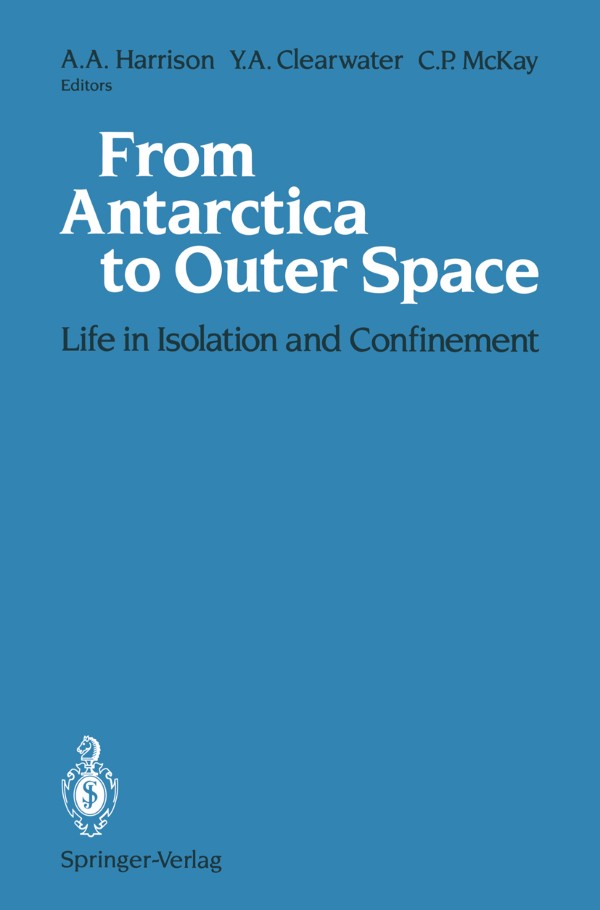
Letters From The Edge
Collected dispatches from explorers at the frontiers of human experience
2025

Blueprint: The Evolutionary Origins of a Good Society
Blueprint shows why evolution has placed us on a humane path — and how we are united by our common humanity.
2020

Pushing Our Limits: Insights from Biosphere 2
Pushing Our Limits is a fresh examination of Biosphere 2, the world’s first man-made mini-world, twenty–five years after its first closure experiment.
2018
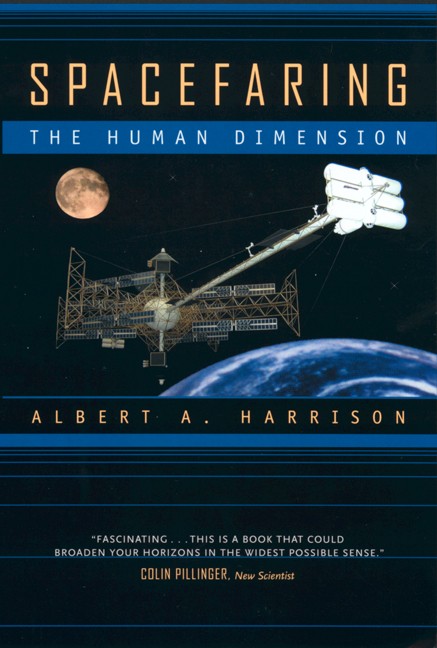
Spacefaring: The Human Dimension
The stars have always called us, but only for the past forty years or so have we been able to respond by traveling in space.
2002
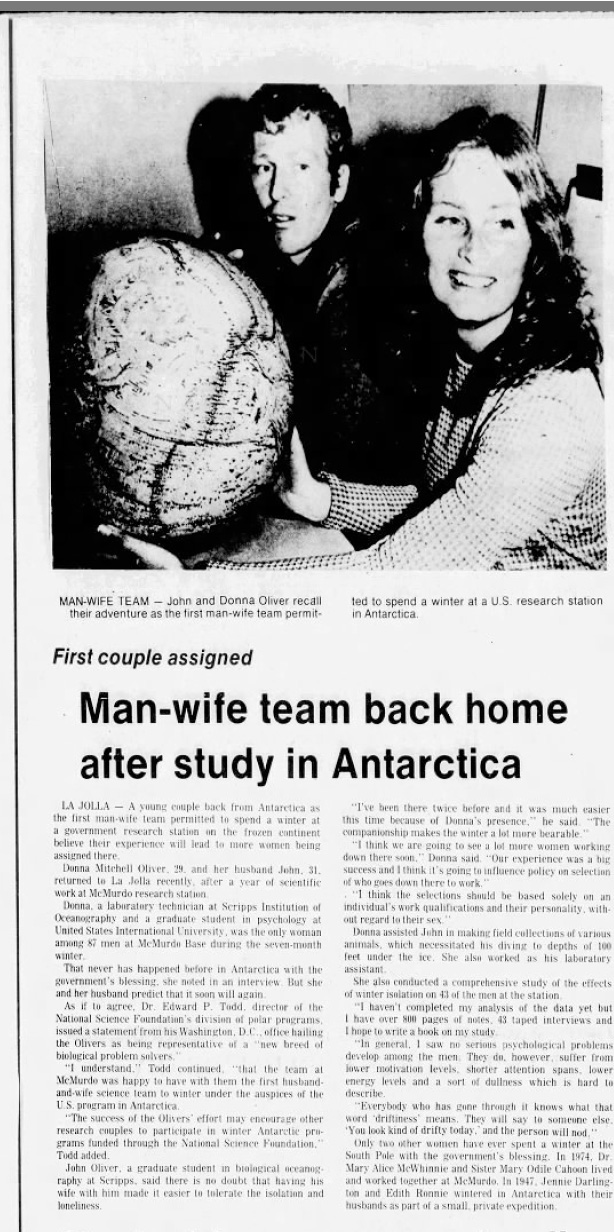
From the Archive — Press Coverage, 1975–1978

Follow the story on Instagram